Power-Ups & Collectibles Lab

Power-Ups that Turn Tricky Puzzles into Sweet Wins

In Cut the Rope 2, power-ups, stars, coins, medals, and adorable customization items work together like a colourful toolbox. This page helps families across Canada learn when to tap into each boost, and when to save it for an even tougher level.

Candy Rain · Balloons · Lightning Rope Stars, Coins, Medals & Hats
Independent info site

This guide is an independent educational resource and is not affiliated with the official Cut the Rope 2 publisher or developers.

Power-Ups at a Glance

Power-ups in Cut the Rope 2 are special tools you can trigger during a level to bend the rules of the puzzle. They help you grab candy, scoop up more stars, or dodge tricky hazards without needing a perfect rope-cut plan.

Forest toolkit preview

Your colourful puzzle toolbox

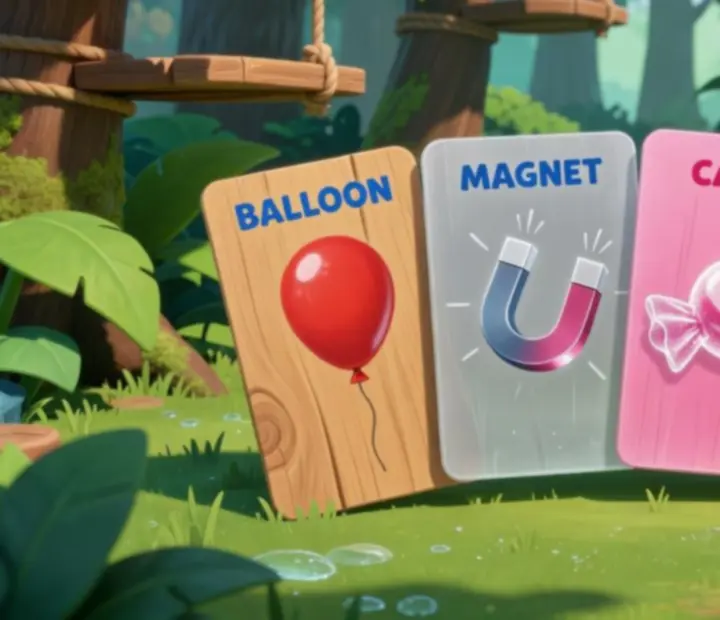
Forest-themed layout of power-up cards showing candy rain, balloons, lightning ropes, and other collectibles

What power-ups actually do

  • Make tricky levels friendlier by adding extra candy, simpler rope paths, or shortcuts.
  • Help collect more stars when timing and precision are hard, especially on small touchscreens.
  • Support younger players who understand the idea of feeding the monster but struggle with physics timing.
  • Turn near-misses into wins so you keep progressing instead of getting stuck.

Power-ups, stars, and medals

Every level in Cut the Rope 2 can be replayed for three challenges: feeding Om Nom, collecting extra items, and beating the clock. Power-ups help you:

  • Secure three stars on difficult layouts.
  • Pick up scattered coins hidden in awkward corners.
  • Meet strict timing rules for shiny medals without replaying levels again and again.

Family-friendly use in Canada

For Canadian families, power-ups are useful when siblings share a device or when a parent joins in to help. They turn a frustrating puzzle into a co-op moment where you can talk together about:

  • Which power-up fits the puzzle layout.
  • How gravity and swinging work in a safe, playful way.
  • When it is smarter to practice first and save boosts for later worlds.

How to Get Power-Ups

Ways to earn, find, or buy power-ups

  • Level rewards: Finish new stages, collect stars, and clear tougher challenges to unlock small bundles.
  • Daily play streaks: Some versions offer login or streak bonuses that include power-up samples.
  • Coin spending: Use in-game coins you earn while playing to buy chosen boosts.
  • Optional purchases: Parents can choose to buy packs with real money where available; always check local Canadian store settings and family controls.

Smart collection habits for families

Because power-ups are limited items, treating them like a shared family supply helps everyone enjoy the game fairly.

  • Agree on “boss levels” or worlds where power-ups are okay to use.
  • Encourage kids to try two or three attempts before asking for a boost.
  • Use hard levels as a chance to talk through physics instead of immediately spending items.
  • Explain which boosts are rare so children understand why you are saving them.

Candy Rain

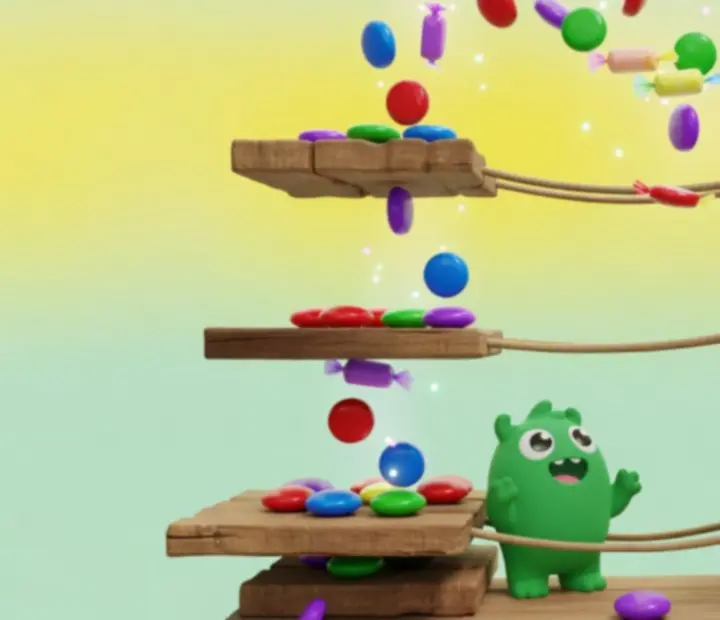
Candy Rain showers the level with extra pieces of candy. Instead of protecting a single candy from hazards, you suddenly have many treats falling through the puzzle at once.

Beginner friendly Good for star hunting

Visual example

Candy Rain in action

Scene of colourful candy pieces raining through a Cut the Rope 2 forest puzzle, landing near the waiting monster

How Candy Rain works

  • When activated, multiple candies fall from above into the scene.
  • Any candy reaching Om Nom completes the level, even if the original candy was lost.
  • Some falling pieces may naturally hit stars or coins along the way.

Best moments to use Candy Rain

  • Levels where the original candy often gets destroyed by spikes or saws.
  • Stages with open sky sections where falling candy can drop straight into Om Nom’s mouth.
  • When you are focused on clearing a world and are less worried about perfecting every route.

Common traps to avoid

  • Using Candy Rain on levels with low ceilings, where candy gets stuck on ropes or platforms.
  • Activating it before you test whether a simple extra rope cut would solve the puzzle.

Om Nom’s Magnet

Om Nom’s Magnet power-up tugs candy in his direction, pulling it around corners, over bumps, and sometimes right through complicated obstacle courses.

What the Magnet does

  • Creates a gentle pull that attracts candy toward Om Nom.
  • Helps candy slide along platforms or ropes that would normally stop it.
  • Makes precise timing slightly more forgiving, especially for younger players.

Best situations for the Magnet

  • Levels where candy keeps stopping one step away from Om Nom.
  • Puzzles with narrow tunnels where manual timing is hard on a phone.
  • When you already know the solution but struggle to repeat it three times for every challenge.

Magnet strategy and safety checks

Smart uses

  • Trigger the Magnet only after you have cleared obvious hazards with normal rope cuts.
  • Use it to finish the time challenge when the regular level already feels very familiar.
  • Combine with gentle swinging motions for extra reach.

When to hold back

  • If the puzzle still feels mysterious, practice without boosts first.
  • Avoid using the Magnet in levels where candy needs to visit several areas before reaching Om Nom; the pull might skip goals.
  • Do not stack it with other boosts until you know how each one behaves alone.

Solutions with Balloons

The Balloon power-up ties an invisible balloon string to candy or objects, gently lifting them toward the sky. It is perfect for escaping pits, avoiding spikes, and reaching high platforms.

Vertical movement Hazard escape

Balloon demo

Floating out of danger

Colourful balloon lifting candy safely past spikes and moving platforms in a vertical puzzle layout

Best-use situations

  • When candy has dropped too low and there is no simple rope to swing it back.
  • Levels with spikes on the floor but space above for careful floating.
  • Puzzles where you must first go down to collect fruit, then rise back up safely.

Common trap-avoidance strategies

  • Watch for ceilings. A balloon that rises into spikes or a saw is wasted.
  • Check that the path above is clear of moving platforms that might push candy away.
  • Use short test rises before releasing ropes, so you see exactly where the balloon will carry the candy.

For kids, balloons feel magical; for parents, they are a gentle way to talk about gravity and buoyancy in a playful puzzle world.

Lightning Rope

Lightning Rope acts like an instant, electric swipe that slices through every rope in the level at once. It is powerful, fast, and must be used thoughtfully.

How Lightning Rope behaves

  • All ropes currently holding candy or objects are cut in a single flash.
  • Anything swinging or hanging continues under normal gravity and momentum.
  • You cannot undo the cut, so it is best to set the scene first.

Strategic planning for one-move solutions

  • First, arrange candy and helpers so that one big release will pass through stars and fruit.
  • Use Nommies like Roto, Blue, or Lick to position paths before activating the lightning.
  • Save Lightning Rope for time challenges where quick cuts are essential.
  • Avoid using it when the puzzle expects careful, step-by-step swinging; single cuts might skip goals entirely.

Families can treat Lightning Rope like a special "emergency escape" card: powerful, rare, and worth discussing before anyone taps it.

The Magic Hat

The Magic Hat pairs up colourful hats inside a level. When candy enters one hat, it pops out of the matching hat, skipping over walls, gaps, and obstacles.

Why the Magic Hat is special

  • Behaves like a teleport tunnel with a fun, visual twist.
  • Lets candy reach areas that are too far to swing to with regular ropes.
  • Can be placed or activated in ways that change the ideal route through the puzzle.

Great uses and smart placement

  • Place one hat below a star or coin cluster and the other near Om Nom.
  • Use hats to jump under heavy platforms that normally block candy.
  • Combine with balloons or Roto to move candy into a hat from awkward angles.
  • Test with dropped test candy or objects first to see where the exit launches each item.

For children, the Magic Hat feels like a magic trick. For adults, it is a clever way to show how path-changing tools affect a system, without using complicated language.

Stars, Coins, Medals, Hats, Sweets & More

Power-ups connect closely to the items you collect while playing. Think of the game as a cheerful sticker book: stars show progress, coins unlock options, medals celebrate full mastery, and hats and sweets add style.

Stars

Purpose: Measure how well you completed each puzzle and unlock new level collections.

How to obtain: Guide candy through each glowing star before it reaches Om Nom.

Best usage of power-ups: Use Candy Rain, Balloons, or the Magnet when one final star keeps slipping away after many attempts.

Tip: Practice a level until you can capture two stars naturally, then spend a boost to secure the third.

Coins

Purpose: Buy select power-ups, hats, or other goodies in the in-game shop, depending on version.

How to obtain: Collect coins hidden inside levels or awarded as play bonuses.

Best usage of power-ups: Use Balloons or the Magic Hat to visit side paths where coins float, then return safely to the main route.

Tip: Save coins for rare boosts that help across many worlds, not just early stages.

Medals

Purpose: Prove that you have completed every type of challenge in a world, from fruit runs to time trials.

How to obtain: Finish each level’s main goal, extra collection goal, and timing challenge.

Best usage of power-ups: Use Lightning Rope or the Magnet for tight time limits, and Balloons or Hats for tricky collection routes.

Tip: Clear each level the "normal" way first, then return with a medal plan and carefully chosen boosts.

Hats

Purpose: Dress up Om Nom and sometimes unlock special interactions or themed challenges.

How to obtain: Buy with coins or unlock by completing groups of levels, depending on your version.

Best usage of power-ups: Use boosts to quickly finish the levels needed to unlock a favourite hat for your child.

Tip: Turn hat collecting into a family goal chart, where each unlocked style celebrates patient puzzle practice.

Sweets

Purpose: Alternate candy designs and fun visual customizations that keep the game feeling fresh.

How to obtain: Earn through achievements, events, or shop purchases where available.

Best usage of power-ups: None required; sweets are mainly for fun. Save boosts for stars and medals.

Tip: Let kids choose which sweet style to equip as a reward for careful play instead of rushing boosts.

Finger traces & other custom items

Purpose: Change how rope cuts and touches look, adding personality to your gestures.

How to obtain: Often found in shops or special events tied to progression.

Best usage of power-ups: Treat them as separate from boosts; they decorate, while power-ups solve.

Tip: Encourage kids to experiment with traces on safe, early levels where no boosts are needed.
Strategic Use Tips

Using power-ups well feels a bit like running a tiny puzzle lab. Instead of pressing every button at once, you test, learn, and choose just the right boost for each situation.

When to use power-ups

  • After several honest attempts where you understand the idea but cannot quite execute it.
  • On late-world levels that block progress for the whole family.
  • During time challenges where one smart boost can turn a near-miss into a comfortable finish.
  • When helping a younger player experience success and stay excited about the game.

When not to use power-ups

  • On the very first play-through of a new level; explore its ropes and physics first.
  • If only the first star is missing; that usually means the path is not quite right yet.
  • When you are tired or rushing; it is easy to tap the wrong boost by accident.
  • On simple training levels where kids can safely practice timing and momentum.

Community-inspired ideas

  • Keep a short family rule: "Try three times, then pick one power-up together."
  • Use screenshots or quick sketches to remember favourite solutions for hard levels.
  • Encourage kids to explain why a certain boost fits a level before using it.

Common Beginner Mistakes

1. Spending boosts before learning the level

New players sometimes trigger Candy Rain or Balloons immediately. This often wastes a power-up on a level that could be solved with one more thoughtful rope cut.

Fix: Play once just to explore, then again to test a plan. Only use a boost on the third try.

2. Stacking too many power-ups at once

Combining Magnet, Balloons, and Lightning Rope in the same attempt can make the puzzle unpredictable and hard to repeat later.

Fix: Add only one new power-up at a time so you can see its effect clearly.

3. Using boosts on simple collection goals

Sometimes a missed star or coin is caused by a small timing error, not a difficult design.

Fix: Slow down, count "one-two-cut" out loud with kids, and treat it as a mini timing game before reaching for a boost.

4. Forgetting about time challenges

Players may spend power-ups to feed Om Nom once, then realize they still need to repeat the level quickly for the final medal.

Fix: Check the three objectives for each level and plan where boosts will help the most.

5. Ignoring Nommies

Roto, Lick, Blue, Toss, Boo, Snailbrow, and Ginger can often solve a puzzle without any boosts at all.

Fix: Visit the Nommies guide and practice combining helpers before spending items.

6. Treating power-ups as the only solution

Power-ups are there to support discovery, not replace it. Overusing them can remove the joy of finally understanding a tricky puzzle.

Fix: Celebrate no-boost victories with small family rewards, like choosing the next level pack together.

Power-Ups FAQ

Do I need power-ups to finish Cut the Rope 2?

No. The game is designed so that most levels can be solved without boosts. Power-ups mainly help you progress faster or earn extra stars and medals when you are stuck.

Which power-up is best for beginners?

Candy Rain is usually the easiest for new players to understand because more candy simply appears. Balloons are the next step for learning how vertical movement works.

How can families avoid overspending?

Use device-level purchase controls available in Canadian app stores, agree on clear rules about buying packs, and focus on earning coins and rewards through regular play first.

Are power-ups different between worlds?

The core power-ups stay the same, but their impact can feel different in Forest, City, Junkyard, and Underground environments. Open areas favour Candy Rain, while tight tunnels suit the Magnet and Magic Hat.

Should I save power-ups for later worlds?

It is a good idea to keep a small reserve. Use some boosts to soften early frustration, but save rare items such as Lightning Rope for advanced worlds and medal runs.

Where can I learn more about strategies?

Our Puzzle Lab strategies section explores rope cutting, physics, Nommies, and medal planning in more detail, all written for Canadian families and casual players.